
The Origin of Inganji Roots
Inganji Roots is not really the beginning of the story. It is the current engine of a project that began in Minembwe more than two decades ago, with the conviction that lasting community change comes from supporting the people, and building the institutions and systems they need to rebuild themselves.
The Vision Begins
Our story dates back to 2000 when one of our founders, Lazare Rukundwa Sebitereko, returned to Minembwe with a vision of rebuilding his community through education. No university existed there. Young people had nowhere nearby to keep learning once they finished secondary school. Lazare believed a vision only survives if people carry it together. He wanted to build something the whole community would own.
The university’s vision was to produce graduates, who understood their community’s problems from the inside, and who would study with the purpose of solving them. And he believed the learning itself had to be shared, built with local hands and outside partners working side by side, not handed down from one to the other.
At that time, Minembwe was a place where young people had few opportunities to access higher education, and the community was struggling under poverty. He had a conviction that education could be a starting point for rebuilding what was broken.
The First Institution: Eben-Ezer University
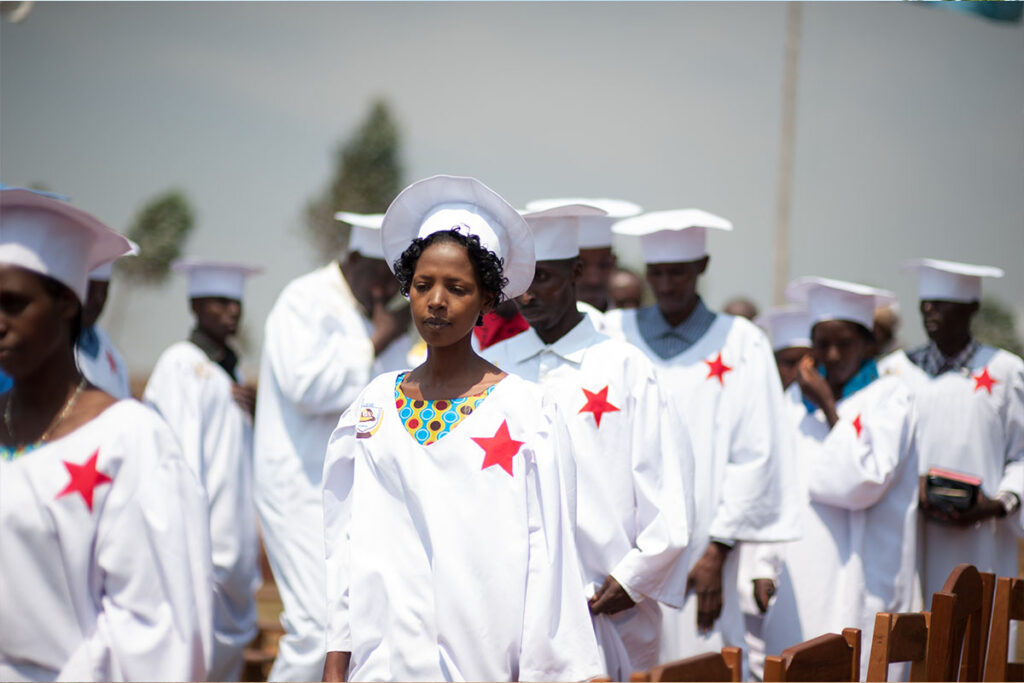
Lazare set off on this mission by co-founding Eben-Ezer University in 2001, an institution of higher education in a place where people had limited access to education and opportunity. Eben-Ezer University’s focus included Theology, Education, Health Sciences, Agricultural Sciences, and Development Sciences.
Eben-Ezer University was the first manifestation of the philosophy under which we operate: we believe that rather than simply providing relief to people living in a broken system, it is much more efficient to build institutions that give them the capacity to rebuild their own lives. The university was part of a larger community-development strategy.
Expanding Access to Education
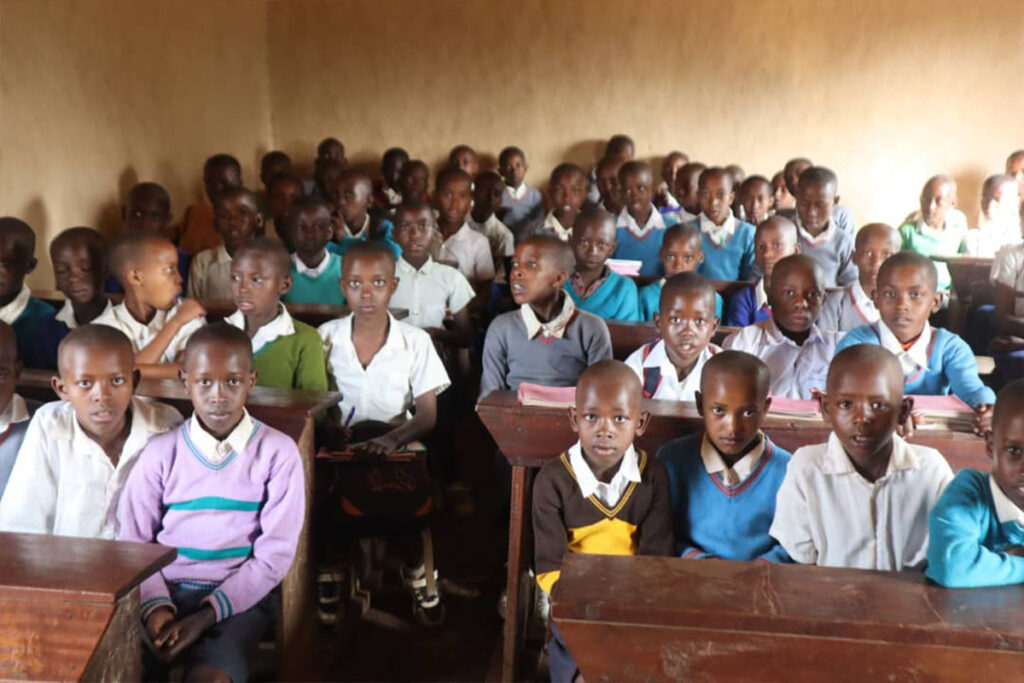
As the university grew, the Complexe Scolaire d’Application (CODAP-UEMI), was established, extending the educational work into Primary and Secondary Education.
We noticed that education alone could not solve the economic challenges facing the community. Conflict had pushed many young people out of school. Some left to join armed groups and later came back looking for a way forward.
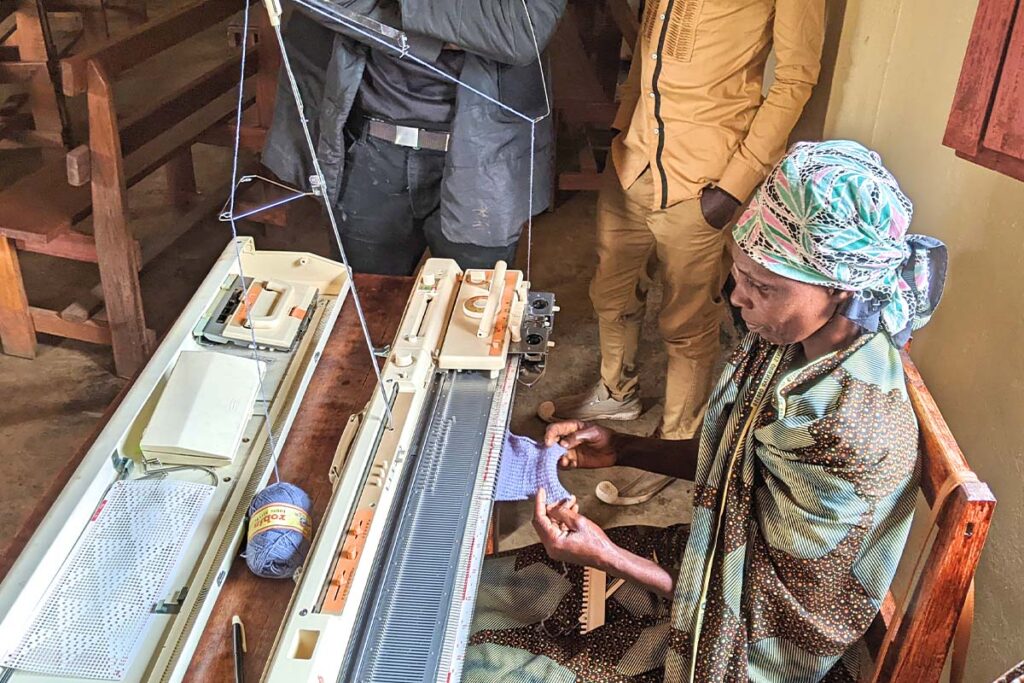
Minembwe had no vocational training center at the time, so we created the Centre Professionnel de Développement Communautaire (CPDC), teaching practical skills in Agriculture, livestock farming, Mechanics, Construction, Electricity, Sewing, and other trades. CPDC also serves single mothers and widows. Many girls marry young here and never finish school. Some lose their husbands to conflict and are left with no way to support their families. Close to 30% of young women in Minembwe face this. CPDC helps them learn a skill so they can build a stable life for themselves and their families.
Young people also needed practical skills they could use to earn a living and contribute to rebuilding their communities. This inspired the creation of the Centre Professionnel de Développement Communautaire (CPDC), a vocational training centre.
Building Access to Healthcare and Pathways to Economic Growth
As our network of institutions grew, another gap became clear.: access to healthcare. In 2021, As our network of institutions grew, another gap became clear. The university was training students in medical sciences, young people from Minembwe itself, but they had nowhere to put that training into practice and serve their own community.
In 2021, we established the Clinique Médicale de l’Université Eben-Ezer de Minembwe to give them that hands-on experience, and it received provincial health accreditation. What started as a training ground for local students became something bigger: real medical care in a community that had very little access to it before, delivered by the very people who grew up there.
The next gap was access to finance. People can acquire skills and have the ability to work, but without access to savings, credit and capital, it remains difficult to turn those capabilities into sustainable livelihoods. In 2022, we established COOPEMI, a savings and loans cooperative, to create greater access to financial services and economic opportunity for the community.
Around this time, the context became even more difficult. As conflict intensified in the region, thousands of people were displaced from their homes and they sought refuge at Eben-Ezer University, hosting 5000 IDPs.
Inganji Roots
By 2017, our work had grown well past the university. We were running schools, a clinic, a savings cooperative, and more, all under one roof. But our name still tied us to being a university, and that no longer told the full story of who we were. So in 2025, we rebranded as Inganji Roots.
Today, Inganji Roots is a registered nonprofit operating in DRC and Burundi. We stand beside the people conflict and hardship try hardest to break: widows, orphans, prisoners, youth with nowhere else to turn. Our work follows one path, start to finish. It begins with healing from trauma. It grows into education, then income, then leadership, until the very people we walked beside are the ones leading change in their own communities. We call this Heal, Learn, Earn, Lead model.
HEAL: Trauma care and mental health support in the middle of crisis.
LEARN: Education and skills-building where access is limited.
EARN: Creating pathways to income and independence.
LEAD: Supporting survivors to organize, speak, and shape change.
We invite you to be part of it.
The Origin of Inganji Roots
Inganji Roots is not really the beginning of the story. It is the current engine of a project that began in Minembwe more than two decades ago, with the conviction that lasting community change comes from supporting the people, and building the institutions and systems they need to rebuild themselves.
The Vision Begins
Our story dates back to 2000 when one of our founders, Lazare Rukundwa Sebitereko, returned to Minembwe with a vision of rebuilding his community through education. No university existed there. Young people had nowhere nearby to keep learning once they finished secondary school. Lazare believed a vision only survives if people carry it together. He wanted to build something the whole community would own.
The university’s vision was to produce graduates, who understood their community’s problems from the inside, and who would study with the purpose of solving them. And he believed the learning itself had to be shared, built with local hands and outside partners working side by side, not handed down from one to the other.
At that time, Minembwe was a place where young people had few opportunities to access higher education, and the community was struggling under poverty. He had a conviction that education could be a starting point for rebuilding what was broken.
The First Institution: Eben-Ezer University
Lazare set off on this mission by co-founding Eben-Ezer University in 2001, an institution of higher education in a place where people had limited access to education and opportunity. Eben-Ezer University’s focus included Theology, Education, Health Sciences, Agricultural Sciences, and Development Sciences.
Eben-Ezer University was the first manifestation of the philosophy under which we operate: we believe that rather than simply providing relief to people living in a broken system, it is much more efficient to build institutions that give them the capacity to rebuild their own lives. The university was part of a larger community-development strategy.
Expanding Access to Education
As the university grew, the Complexe Scolaire d’Application (CODAP-UEMI), was established, extending the educational work into Primary and Secondary Education.
We noticed that education alone could not solve the economic challenges facing the community. Conflict had pushed many young people out of school. Some left to join armed groups and later came back looking for a way forward.
Minembwe had no vocational training center at the time, so we created the Centre Professionnel de Développement Communautaire (CPDC), teaching practical skills in Agriculture, livestock farming, Mechanics, Construction, Electricity, Sewing, and other trades. CPDC also serves single mothers and widows. Many girls marry young here and never finish school. Some lose their husbands to conflict and are left with no way to support their families. Close to 30% of young women in Minembwe face this. CPDC helps them learn a skill so they can build a stable life for themselves and their families.
Young people also needed practical skills they could use to earn a living and contribute to rebuilding their communities. This inspired the creation of the Centre Professionnel de Développement Communautaire (CPDC), a vocational training centre.
Building Access to Healthcare and Pathways to Economic Growth
As our network of institutions grew, another gap became clear.: access to healthcare. In 2021, As our network of institutions grew, another gap became clear. The university was training students in medical sciences, young people from Minembwe itself, but they had nowhere to put that training into practice and serve their own community.
In 2021, we established the Clinique Médicale de l’Université Eben-Ezer de Minembwe to give them that hands-on experience, and it received provincial health accreditation. What started as a training ground for local students became something bigger: real medical care in a community that had very little access to it before, delivered by the very people who grew up there.
The next gap was access to finance. People can acquire skills and have the ability to work, but without access to savings, credit and capital, it remains difficult to turn those capabilities into sustainable livelihoods. In 2022, we established COOPEMI, a savings and loans cooperative, to create greater access to financial services and economic opportunity for the community.
Around this time, the context became even more difficult. As conflict intensified in the region, thousands of people were displaced from their homes and they sought refuge at Eben-Ezer University, hosting 5000 IDPs.
Inganji Roots
By 2017, our work had grown well past the university. We were running schools, a clinic, a savings cooperative, and more, all under one roof. But our name still tied us to being a university, and that no longer told the full story of who we were. So in 2025, we rebranded as Inganji Roots.
Today, Inganji Roots is a registered nonprofit operating in DRC and Burundi. We stand beside the people conflict and hardship try hardest to break: widows, orphans, prisoners, youth with nowhere else to turn. Our work follows one path, start to finish. It begins with healing from trauma. It grows into education, then income, then leadership, until the very people we walked beside are the ones leading change in their own communities. We call this Heal, Learn, Earn, Lead model.
HEAL: Trauma care and mental health support in the middle of crisis.
LEARN: Education and skills-building where access is limited.
EARN: Creating pathways to income and independence.
LEAD: Supporting survivors to organize, speak, and shape change.
We invite you to be part of it.